6/5/2026

Building Circularity: How Beiersdorf reached 30% Recycled Content

Reducing plastic waste and making packaging more sustainable is one of the challenges for the consumer goods industry. At Beiersdorf, this transformation has been underway for several years — and by the end of 2025, it reached a major milestone: 30% recycled content integrated in its plastic packaging worldwide.

To understand how this was achieved, what challenges had to be overcome and what comes next, we spoke with Eva Bredehorst, Adrian Przybill and Jérôme Lerouge, who have been closely involved in driving our packaging transformation.
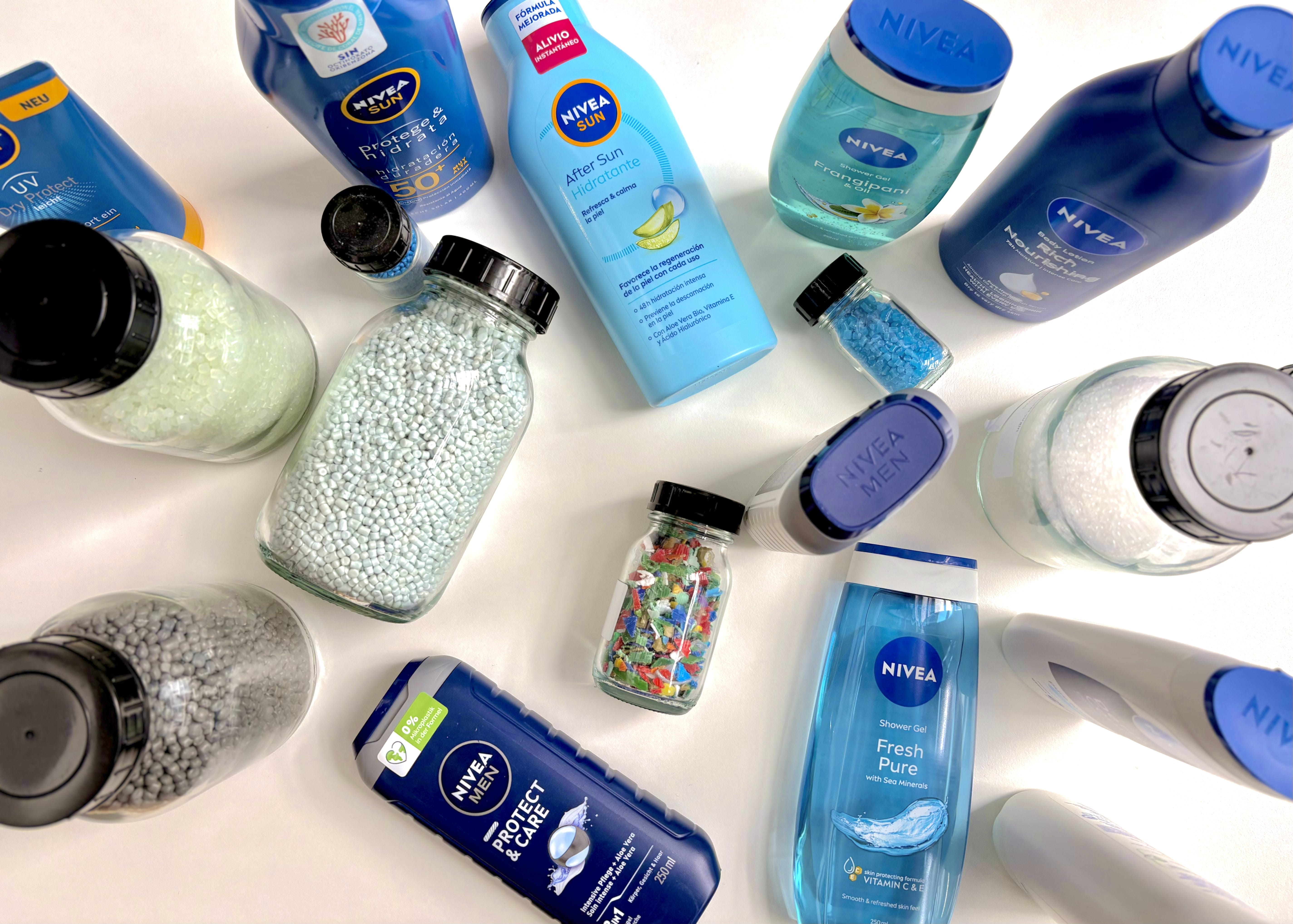
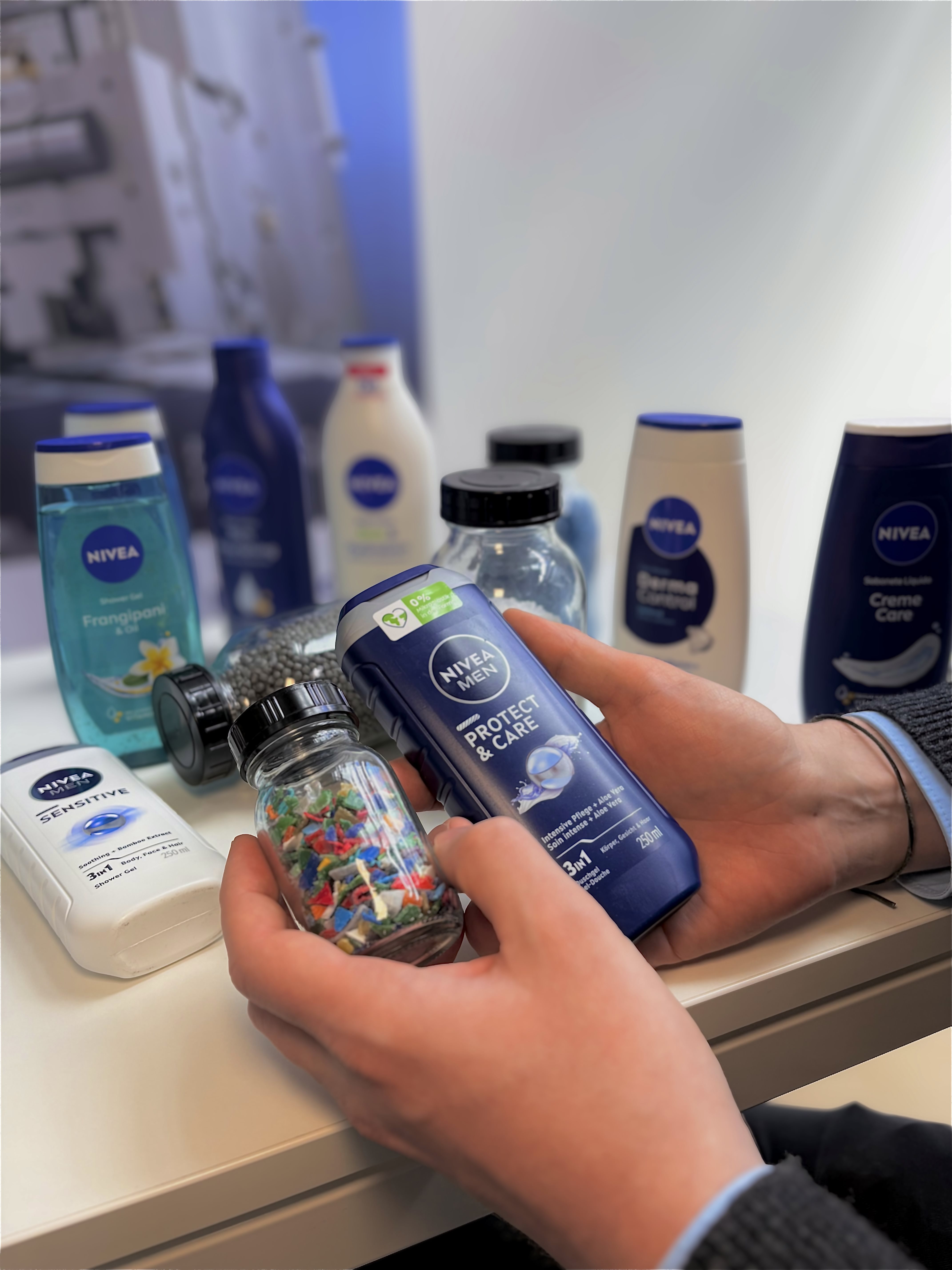
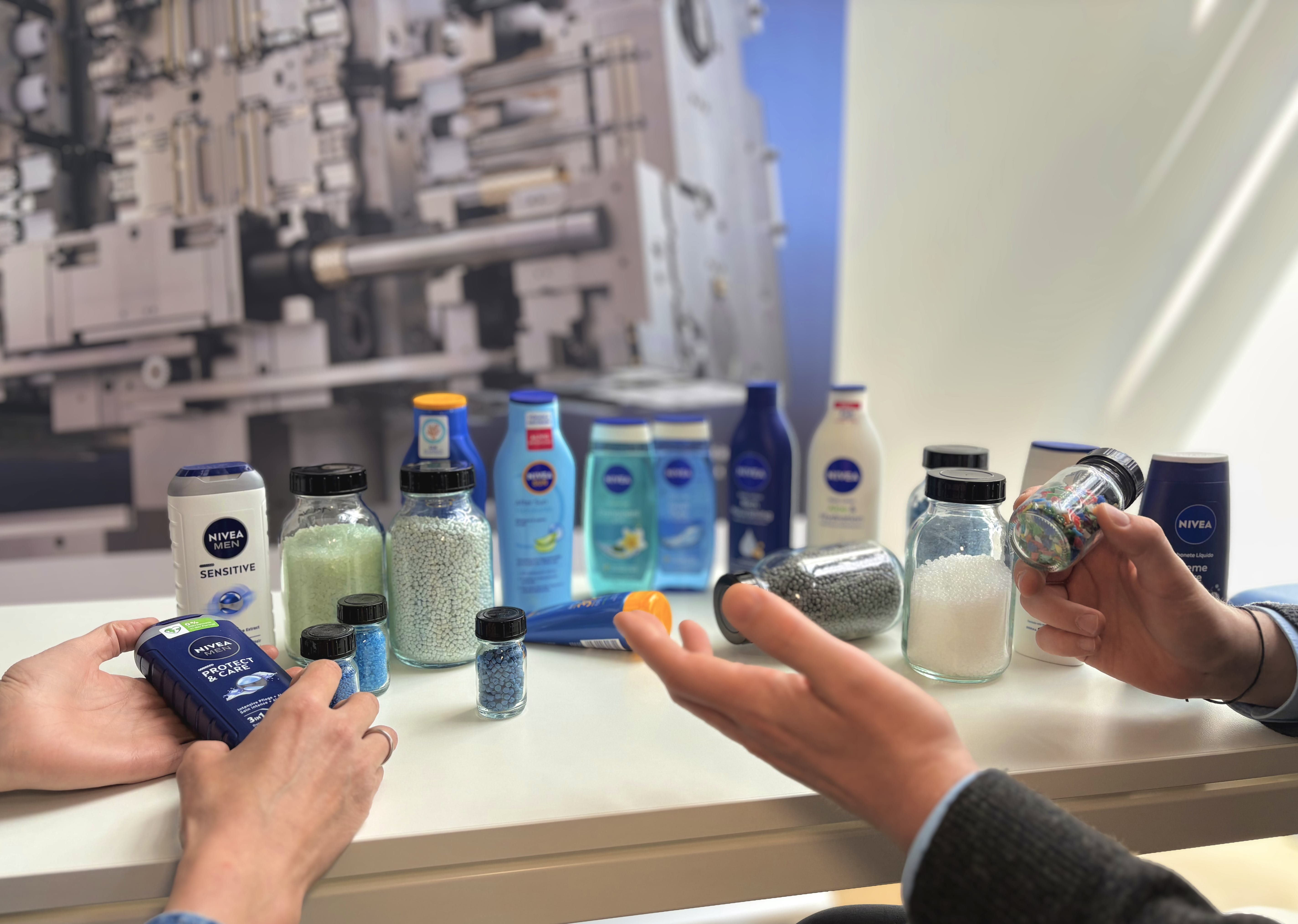
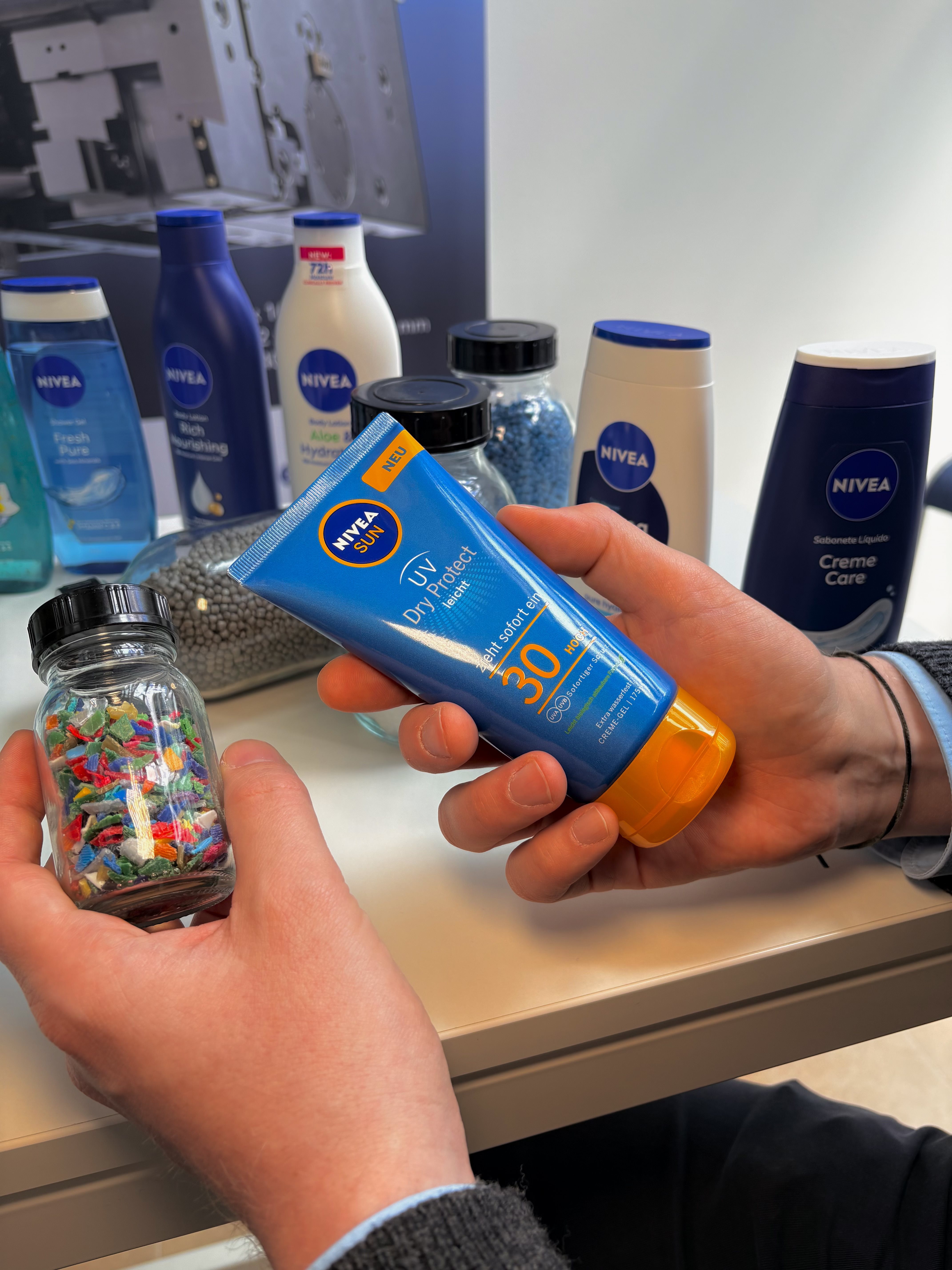
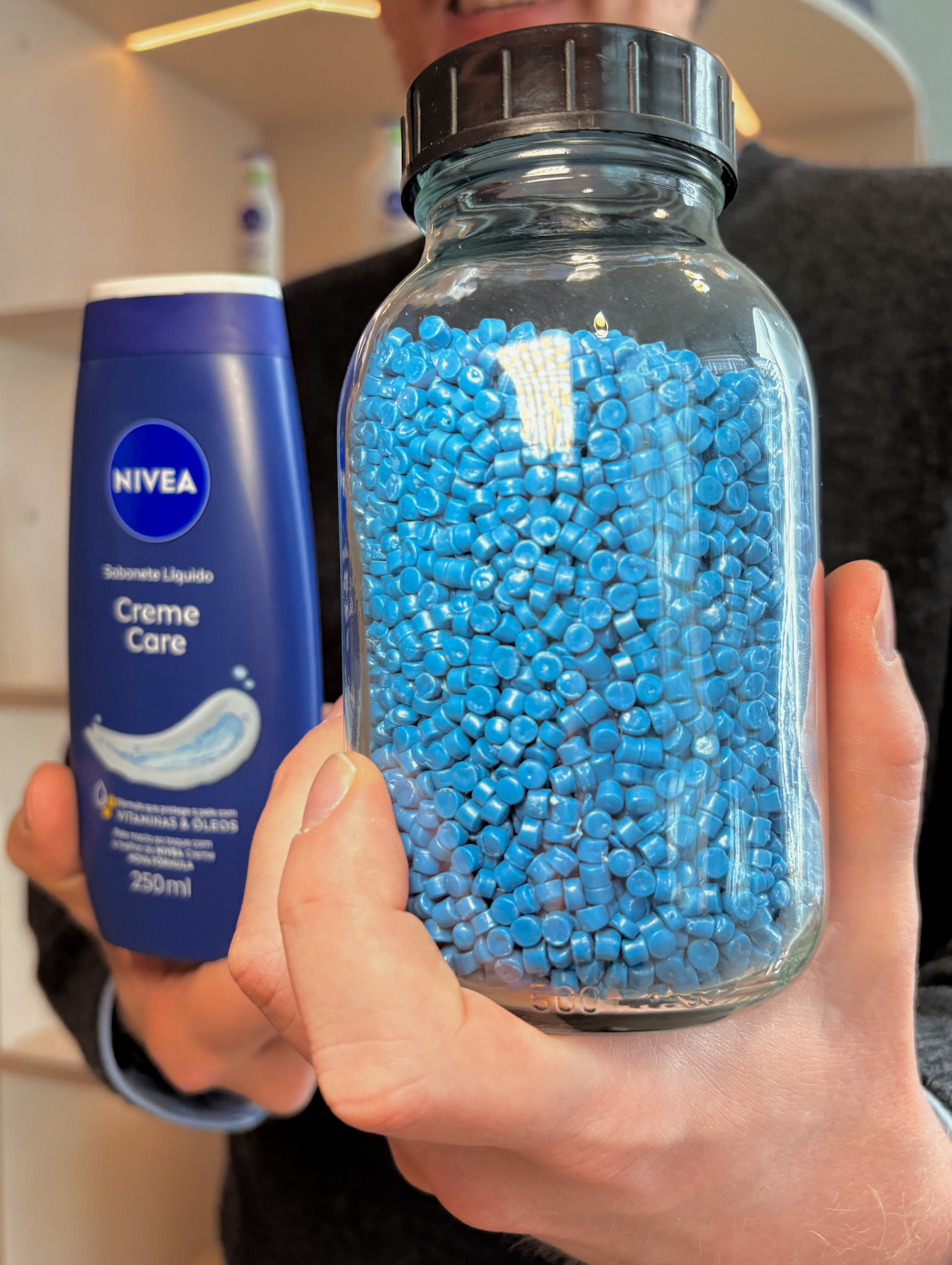
NIVEA personal care and sun care products arranged in a circular layout around jars containing recycled plastic pellets and plastic flakes, illustrating sustainable packaging innovation and the use of recycled materials in plastic packaging.

Beiersdorf reached 30% recycled content in its plastic packaging at the end of 2025. Why is this milestone important?

Eva: This milestone shows proof that the transformation of packaging is possible at scale. Using recycled materials sounds easy and straightforward, but for a global company like us, it’s quite a complex task — especially when product safety, quality and aesthetics must remain uncompromised.

Also, reaching this 30% recycled content milestone means that recycled materials are no longer the exception at Beiersdorf, but an integral part of our packaging portfolio. It shows we can convert sustainability ambitions into concrete action.

How did the journey toward more recycled packaging begin?

Eva Bredehorst:
Eva Bredehorst

Eva: With the launch of our CARE BEYOND SKIN Sustainability Agenda we had committed to reduce the use of virgin plastic in packaging and reach 30% recycled content by end of 2025. Back then, we knew we could not get there with small, isolated packaging changes, but needed to transform our packaging in a way that delivered impact at scale.

One of the first steps was moving from virgin PET to recycled PET, which was readily available from established recycling streams of the food industry. However, this only concerned a small number of products of our assortment. Therefore, we also started working on solutions for more challenging materials, such as polyethylene (PE) and polypropylene (PP), which at first required us to do some groundwork, like the development of a quality standard defining the use of post-consumer material for cosmetic packaging.

What were the biggest levers in reaching the 30% target?

Jérôme Lerouge
Jérôme Lerouge

Jérôme: The biggest lever was clearly the conversion of large product ranges. We deliberately worked on our global bestsellers across large categories, such as our NIVEA Shower, NIVEA Body, NIVEA Hair and NIVEA Sun assortments.

Each portfolio conversion contributed to our target. However, this approach required courage and very close collaboration across many functions — because changing packaging at this scale starts with design and development, requires the right supply chain partners, affects formula compatibility, production processes and relates to the product experience of our consumers. 


What makes the use of recycled plastics so challenging?

Adrian: The main challenge embedding the sustainability aspect while product safety remains and the products’ appearance is not compromised. Recycled plastics — especially PE and PP – comes from household recycling, therefore it varies in terms of quality and color (which virgin material does not).

For companies like us, who are producing so-called fast-moving consumer goods, it’s key to ensure packaging protects the product perfectly throughout its entire lifecycle. That requires extensive testing: How does the recycled material interact with the formula? Does it perform reliably under different conditions, e.g. during transport, during consumer use? Only when all our requirements are fully met, we implement the material. 

How does Beiersdorf ensure the quality of the recycled material?

Adrian Przybill
Adrian Przybill

Adrian: Safety is always our top priority, so this must be guaranteed 100%. Every packaging solution goes through rigorous testing processes before it is implemented. These processes are supported by our extensive internal analytical work, where material performance data are thoroughly evaluated to identify and mitigate any potential risks. This applies even more when recycled materials are used.

We work closely with internal experts and external partners to ensure that recycled plastics meet all necessary standards. Some years ago, we developed a proposal for an “industry standard for cosmetic packaging” to enable the safe use of recycled plastics (PCR) made from post-consumer waste. This proposal led to the founding of the CosPaTox Initiative, which later published the DIN SPEC 91521 standard. This was an important work paving the road to a safe use of PCR materials across the industry. 

What comes next after this important 30% milestone?

Jérôme: We just set our next target for 2030 and this aims to reach 50% of recycled or renewable materials in our plastic packaging. This is an ambitious target and will require continued collaboration across packaging, procurement, analytics and marketing functions. Our packaging transformation is a long-term effort – and while 30% is an important milestone, much more needs to be done to establish circularity. We continue to work on this together with our strategic packaging suppliers, with start-ups, NGOs like Ellen MacArthur and in committees such as Forum Rezyklat in Germany. And, not to forget: the passion and dedication of our Beiersdorf colleagues around the world who support our sustainability transformation – also beyond packaging – is a great motivation and driver of progress. All together, we follow the vision of reaching Net Zero by 2045.

About the editor: Katrin J. Selzer


Katrin has been with Beiersdorf since 2003. After various roles in marketing, strategy, digital and brands PR, Katrin is a Senior Communication Manager since 2018, taking care of sustainability-related stories. She’s very passionate about this topic and enjoys to spread the word and stimulate change through communications.