12/11/2025

From astrophysics to AI-supported skin research

It is estimated that there are around one septillion stars in the visible universe. However, this is merely an extrapolation, as even the most modern technology would not be able to count all the stars individually. But what such an almost unimaginable abundance makes clear is that this field offers scientists almost infinite possibilities for discovering new things. Maria del Pilar Bonilla Tobar, known as Pilar, is also one of those curious people who are always on the lookout for valid answers to exciting questions. Born in Colombia, she has an educational background that you might not instantly associate with Beiersdorf: Pilar is the only astrophysicist in skin research who uses huge data sets and AI to uncover the secrets of the skin. More than ten years ago, she took on the first advertised position as a data scientist at the company. In this interview, she tells us what drives Pilar.

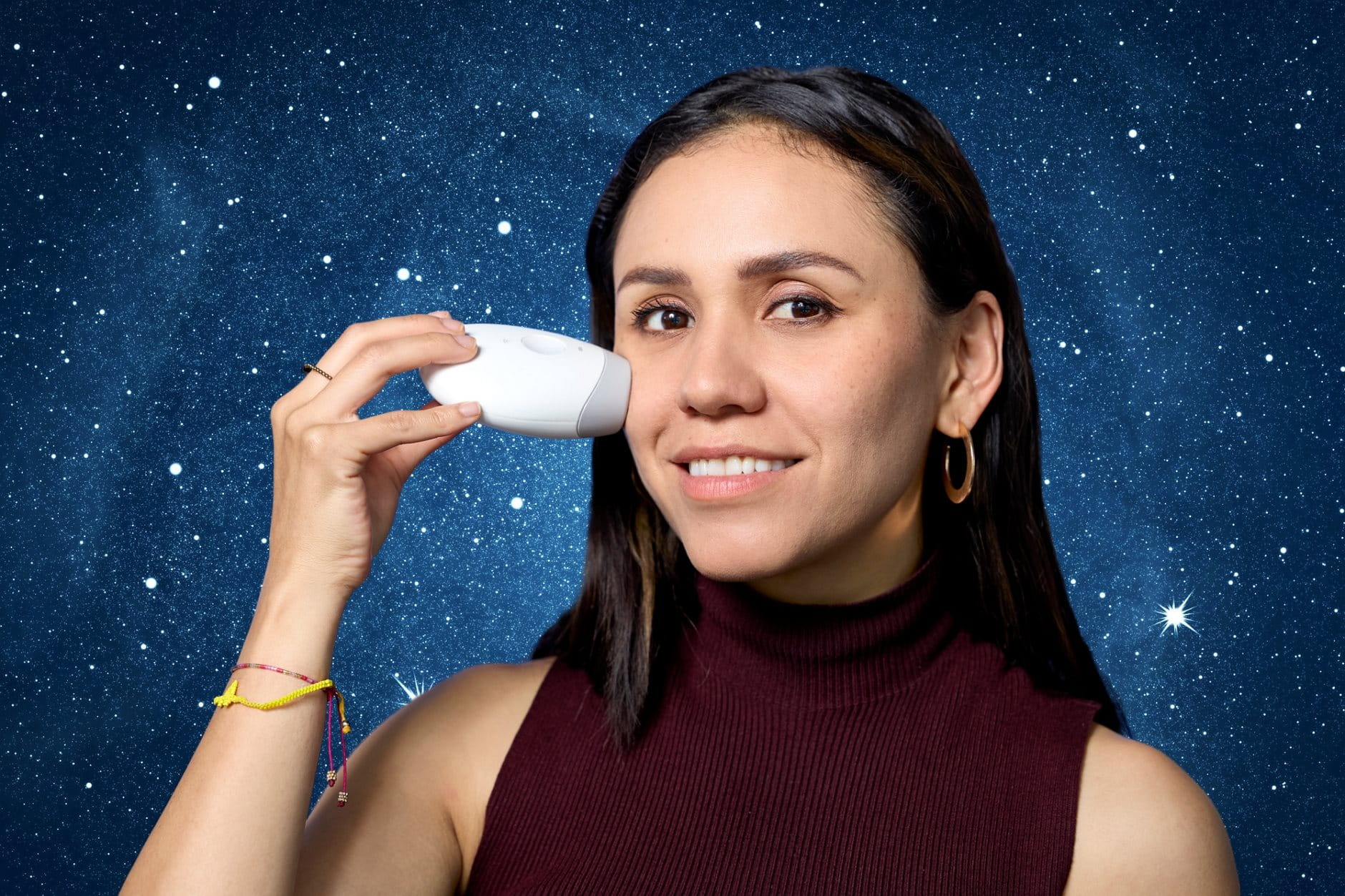
Astrophysicist and data scientist Maria del Pilar Bonilla Tobar uses huge datasets and AI at Beiersdorf to uncover the secrets of the skin.

Pilar, how did you come up with the idea of becoming an astrophysicist?

My fascination with science began early in school. I was always curious to understand what lies beyond what we can see at first glance – to uncover the mechanisms and beauty hidden beneath the surface. I was particularly captivated by Jupiter, with its distinct, colorful bands of clouds in shades of white, red, orange, brown, and yellow. These immense belts move at different speeds, creating turbulence and powerful storms. The most famous of them – the Great Red Spot, a gigantic hurricane larger than Earth itself – left a lasting impression on me. It quickly became clear that I wanted to become a researcher. Even today, I still enjoy observing the night sky with my children, searching for the Perseids or tracing the constellation Cassiopeia – which also happens to be the name of my little daughter.

And what happened next – what path did you take?

First, I moved to Brazil to complete my Master’s degree in theoretical and mathematical physics at the University of UNESP in São Paulo from 2007 to 2009. I then looked around to see where I could realize my dream of going deeper into astrophysics. And that’s how I ended up in Potsdam – at the renowned Leibniz Institute for Astrophysics. During my studies there, I discovered how programming could transform vast collections of astronomical data into models that reveal the hidden patterns and stories of the cosmos.

In addition to your native Spanish, you are fluent in Portuguese, German and English. Is this important for your job?

It is certainly an advantage to speak the language of the country in which you live and work. But for us in research, English is essential and our all-day language in the lab. As a data scientist, completely different languages suddenly play an important role, for example programming languages such as Python, SQL and R. Then there are various tools such as Power BI, Jira, Confluence, Slack, GitHub and MLOps.

That sounds quite complicated and cryptic to laypeople. What is most appealing to you about data?

It is often said that in our increasingly digitalized world, collecting and evaluating data is like digging for gold. I completely agree with this, and it is also true in skin science. Companies that are able to make important decisions based on a sound database have a clear competitive advantage. Data helps to identify correlations and trends and to optimize products and processes. AI systems are also absolutely dependent on being constantly trained with structured high-quality data.


How did an astrophysicist interested in data end up in the “universe” of an international cosmetics company?

Interesting positions in university research are unfortunately few and far between in the field of astrophysics. In 2015, I became aware that Beiersdorf wanted to fill a position as a Research Scientist in the Data Science AI/IoT Lab for the first time. I found this exciting, as skin care has always been important to me and NIVEA has also been present in Colombia since the late 1920s and is a very well-known brand. So I applied – and got the job.

What tasks were part of your “pioneering work” in Beiersdorf research in 2015?

I started out in the Biophysics department and development new data analysis approaches. This involved aggregating and analyzing relevant data from skin care studies conducted in the company over the past 20 years and establishing an appropriate basis for future AI models. Such models were also the focus of the skin hackathon we organized to look for new talents. The main award of the hackathons was a paid internship in our lab, which was a real win-win situation for us and the participants. One of the outcomes was a PhotoAgeClock, where we applied deep learning algorithms for the development of non-invasive visual biomarkers of aging based on Beiersdorf’s clinical photography data. I was also the project lead for the initial efforts to discover the opportunities to support formula optimization using machine learning. As part of that initiative, we identified the Uncountable platform, which remains our partner in this field to this day. In the summer of 2021, I seized the opportunity for the position of Senior Scientist in Data Science AI/IoT – and with it main parts of the data science responsibility for one of the world’s largest skin studies called SKINLY.

What exactly is behind this SKINLY study?

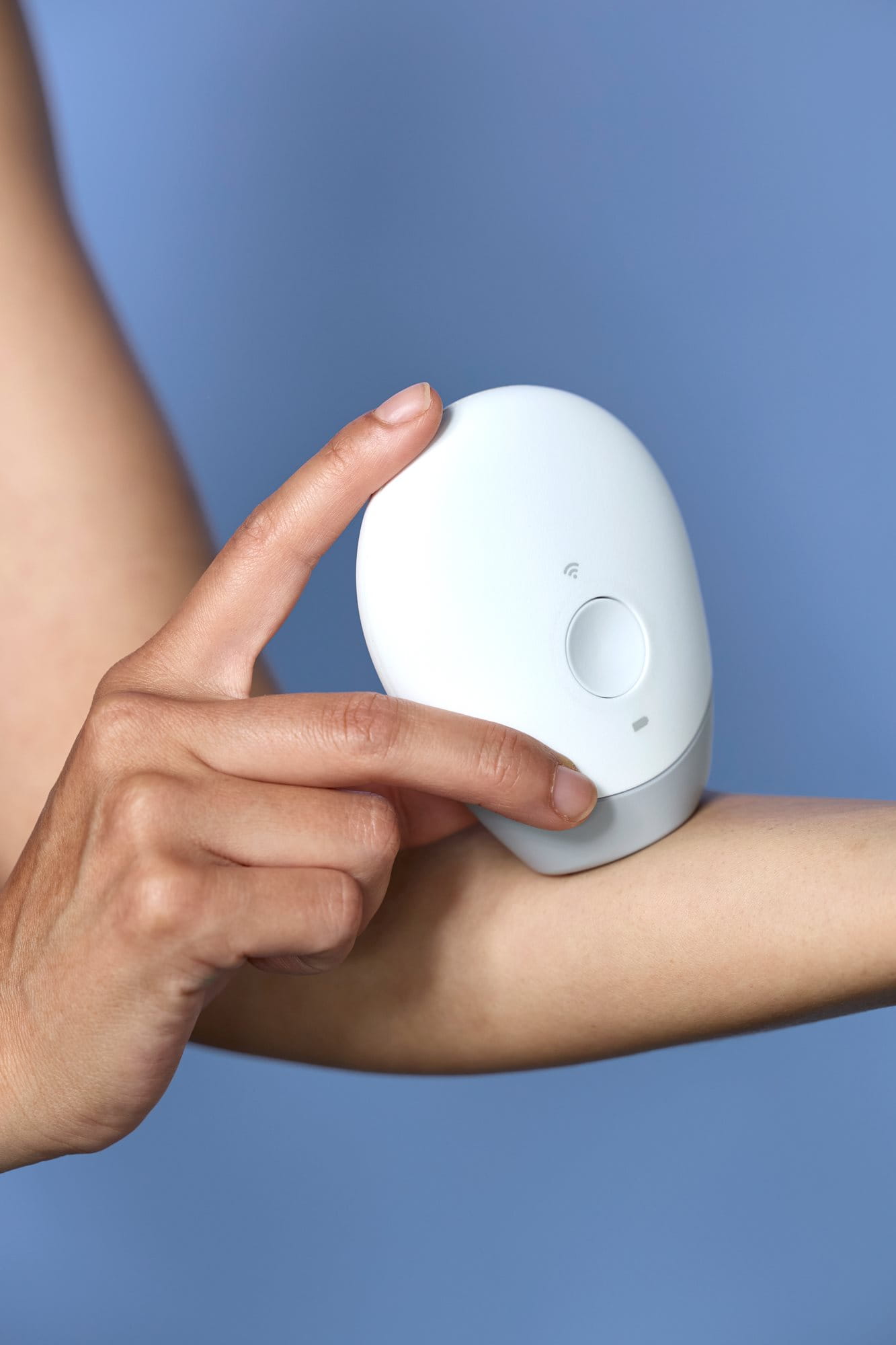
The digital SKINLY measuring device and its corresponding app can collect data on over 80 parameters.

Our unique, AI-driven SKINLY project is running since late 2019. It is a large-scale, global skin study with participants who have already shared their measurements with us from more than 60 countries. A key aspect is the active participation using innovative tools, including a special digital measuring device with three different light sources and a corresponding app. The participants transmit data on more than 80 parameters up to twice a day. These include individual skin characteristics such as wrinkleness, skin tone, complexion and blemishes, as well as information on individual lifestyle, such as sleep, diet, menstrual cycle and environmental conditions, skin care products used and external environmental influences. The results help us to gain a comprehensive understanding of our consumers and their skin as well as the respective influencing factors and to draw conclusions for our product development. The more high-quality data we have, the better our scientists can draw relevant, actionable new knowledge for our research & development and marketing. In addition, the SKINLY ecosystem is getting better with every measurement through the use of machine learning based on AI. To date, more than 21,000 people aged 18 to over 80 have taken part in the SKINLY study. Around one billion data points have been measured and over 120 million high-quality skin images have been generated. Compared to my former research in astrophysics, this volume of data is naturally low, but in terms of skin research, it is a very large, rich and fascinating dataset for data scientists with a passion for skincare – like myself.

Thank you very much for the interview.

INFO BOX:

What is the Internet of Things (IoT)?

The IoT connects the physical world with the digital world. It enables “smart” devices to communicate not only with each other, but also with central applications and services. The networked “thing” often sends information to a cloud. There, the data is processed, made accessible or serves as the basis for further services.


About the editor: Kathrin Erbar

Kathrin takes us on a journey to the fascinating field of research and development at Beiersdorf. Before exploring Beiersdorf’s DNA, she was doing the communication for HR related topics, such as diversity, leadership or New Work. She also used to be responsible for financial communications at Beiersdorf for several years.